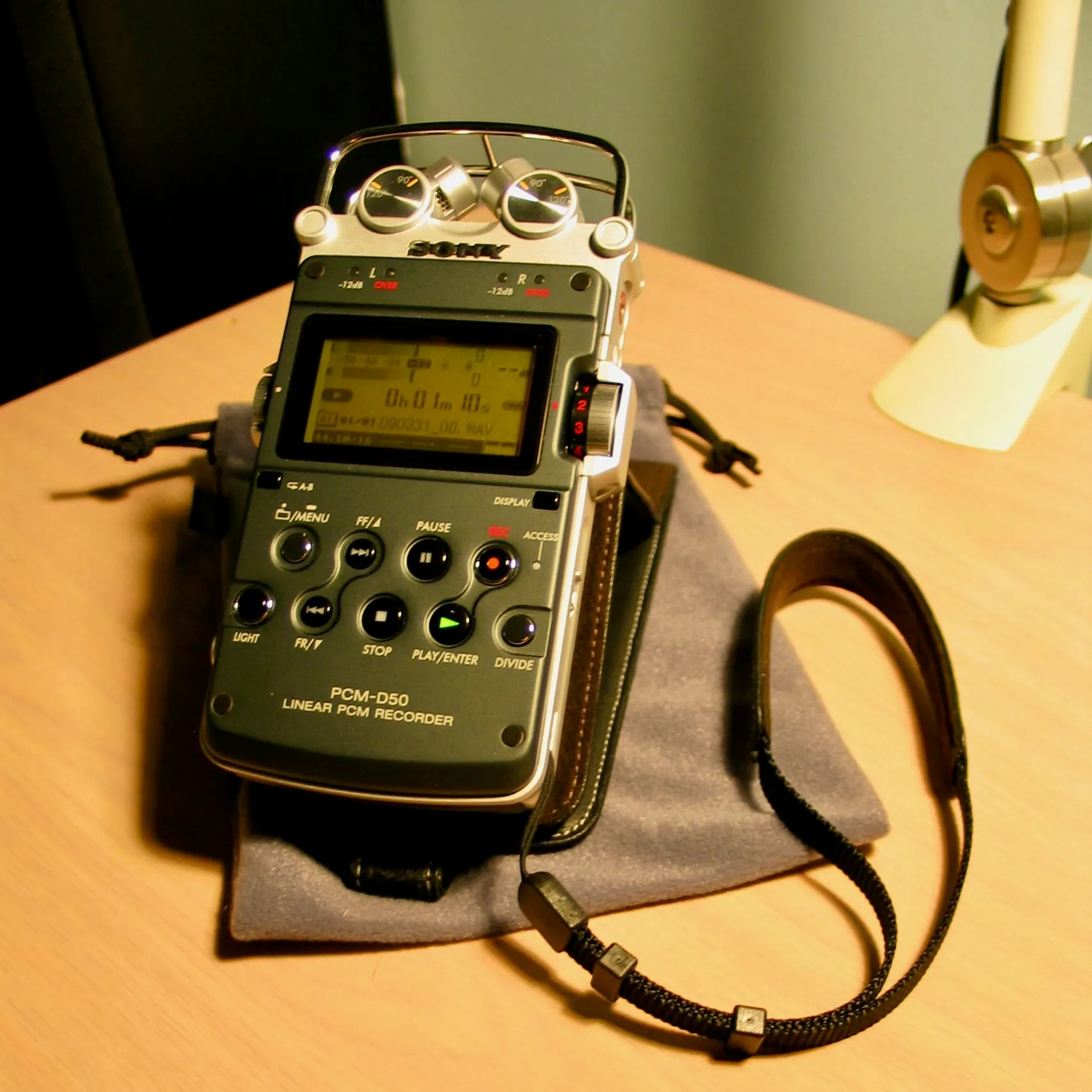
Working with pre-recorded sound material
If synthesis is about creating sound from nothing, then sampling is about recording sounds and playing them back.
Goals for this week#
-
to be able to read in (and play back) a pre-recorded sound file in Pd
-
to understand some of the different creative options (and controls) available to you when working with sampled sounds
Resources#
- Charles’ Pd examples (from no. 11 onwards)
- Section 3.4 of the Programming Electronic Music in Pd book
Creative Notes#
Working with samples leads to many possibilities: Musique Concrete, ambient, hip hop, noise, etc. Here’s a few ideas to help you get started.
Why use found sounds, sampling and field recordings?#
- introduce new and dynamic melodic/sonic and rhythmic material
- create a sense of space or place
- build a context (maybe nostalgia)
- inject meaning via speech or recognisable sounds
- intertextual references and postmodern juxtapositions
Sampling started(?) with Musique Concrète#
-
two main composers at the start of the movement: Pierre Schaeffer (1910-1995) and Pierre Henry (b. 1927)
-
defined by these composers as Real Music™—all their sounds are from physical objects
-
this is music without the abstraction of notation
-
the first example is Cinq études de bruits (1948), composed using vinyl records! No tape yet in France. The piano sounds were supplied by composer/pianist, Pierre Boulez, and it was premiered via radio
Things to consider when using samples#
-
what is your sample, and what kind(s) of meaning does it have: in its original context? out of context?
-
what kind of meaning would you like it to have in its new context?
-
do you want to preserve some of the original meaning (keep it recognisable) or strip the clip of its meaning (usually short samples)?
Content/copyright#
-
always reference your sources in this course and any other situation.
-
be mindful of whether your use of content is ethical and appropriate. Take care with:
-
cultural appropriation; is the material you’re working with culturally sensitive? do you have the right/permission to take those sounds out of context? what would Edward Said say? does your use of this/these sound/s ‘other’ an individual or group?
-
consent; feel free to record in public spaces, but if you can make out specific voices and/or names, get consent
-
Interesting variables/parameters#
-
pitch: you can usually get 4 MIDI notes (semitones) in either direction before the sample starts to have too many artefacts/get weird (which might be cool!) think of the Ferris Bueller coughing piano…
-
amount of the sample being triggered: do you always want to hear the same section of the sample? maybe you reveal more of it over time? or less? or random selections?
-
effects? Is the sample(s) always affected in the same way?
-
forwards or backwards: what does it sound like backwards? can you use these mirror images as a compositional tool? e.g. maybe the user/performer can control which direction the sample is played in
Three examples of ways to control samples in an electronic music context#
-
automated and sequenced—think of drum machines (doesn’t have to be a ‘regular’ beat)
-
Mapped to different controls in a virtual instrument and manipulated live (maybe with a controller, when we get there)—think of an electric piano or MIDI saxophone
-
played ‘as is’—maybe there is a field recording that acts as a backdrop for the rest of the sounds in your composition
COOL ensemble performances using sampling:#
- Birds Nest and Snow Music by Ensemble Metatone
- Sparks by CLOrk Laptop Orchestra
Some things you might consider when choosing a sample#
-
are you coming from a musical or extramusical starting point?
-
I want a particular kind of sound, e.g. short, sharp, unpitched attack
-
I want a particular kind of feeling, e.g. warm, relaxed
-
maybe you want some kind of message, and are using speech or a recognizable sound (orchestra tuning up, radio ad, etc.)
-
-
do I want a solid/static sound? if there is rhythm in the sample, should I try to get rid of it, or work with it?
-
would it be easier to synthesise the sound I want?